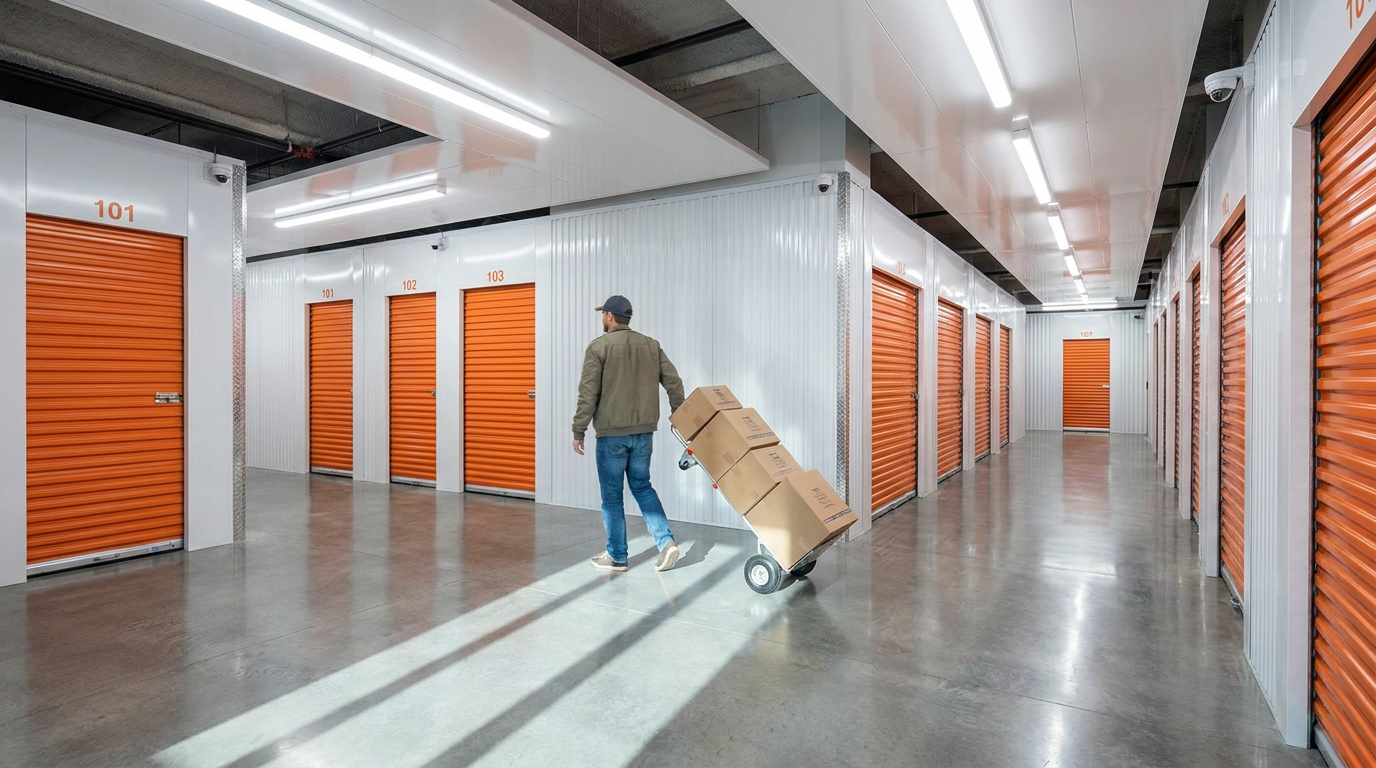
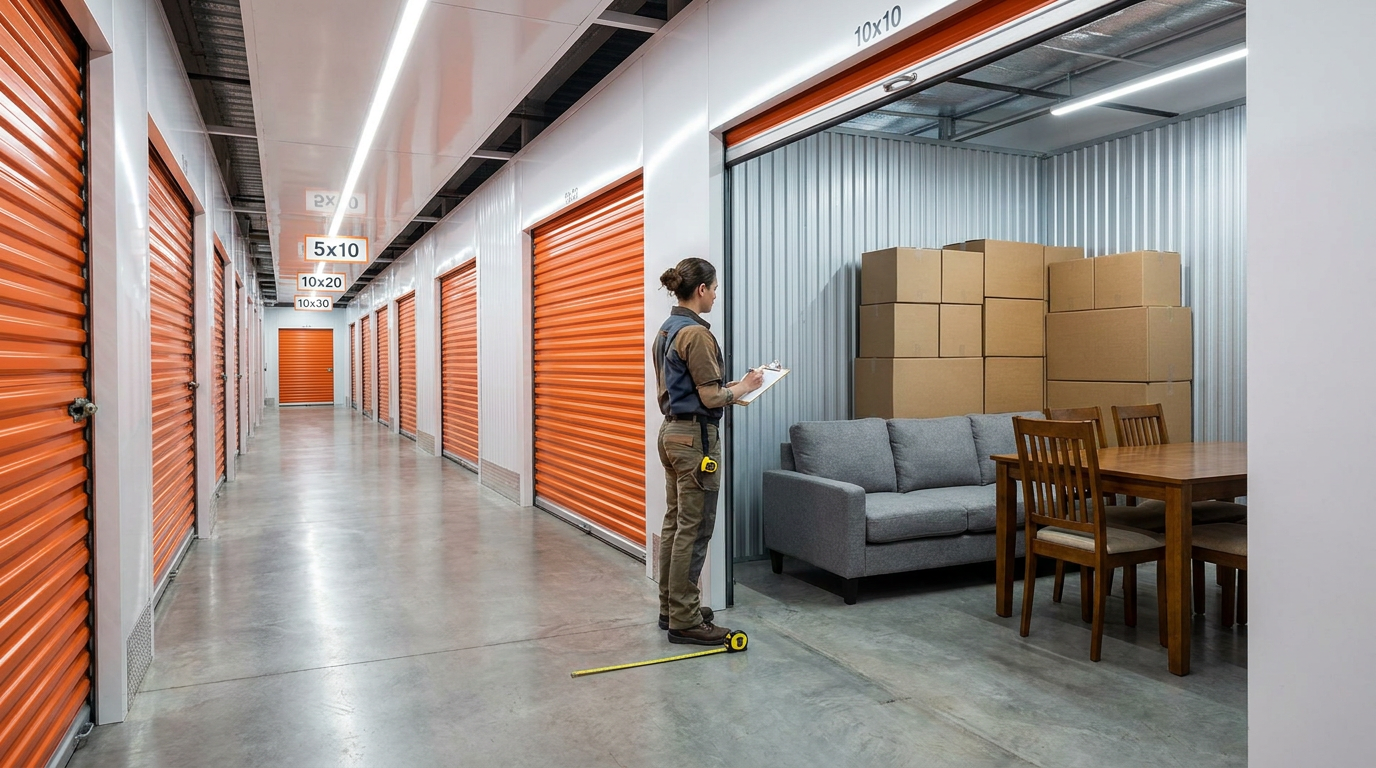
A 10x10 storage unit (100 square feet) fits most one-bedroom apartment furniture, including a queen bed, dresser, couch, and dining table. For larger homes or bulky pieces like sectionals and armoires, you need a 10x15 or 10x20 unit. Measure your largest items first, add 15-20% extra space for an access aisle, and choose the next size up if you plan to retrieve items frequently.
| Key Points: | |
|---|---|
| • | 5x10 units (50 sq ft) hold a mattress set, small dresser, and 10-15 boxes for $29-60/month |
| • | 10x10 units (100 sq ft) fit one-bedroom furniture including a couch, bed, and dining set |
| • | Measure furniture dimensions before choosing; a standard couch is 7-8 feet long and needs a 10x10 minimum |
| • | Add 15-20% extra space for walking aisles if you need regular access to stored items |
| • | Disassembling bed frames and tables can reduce required space by 25-30% |
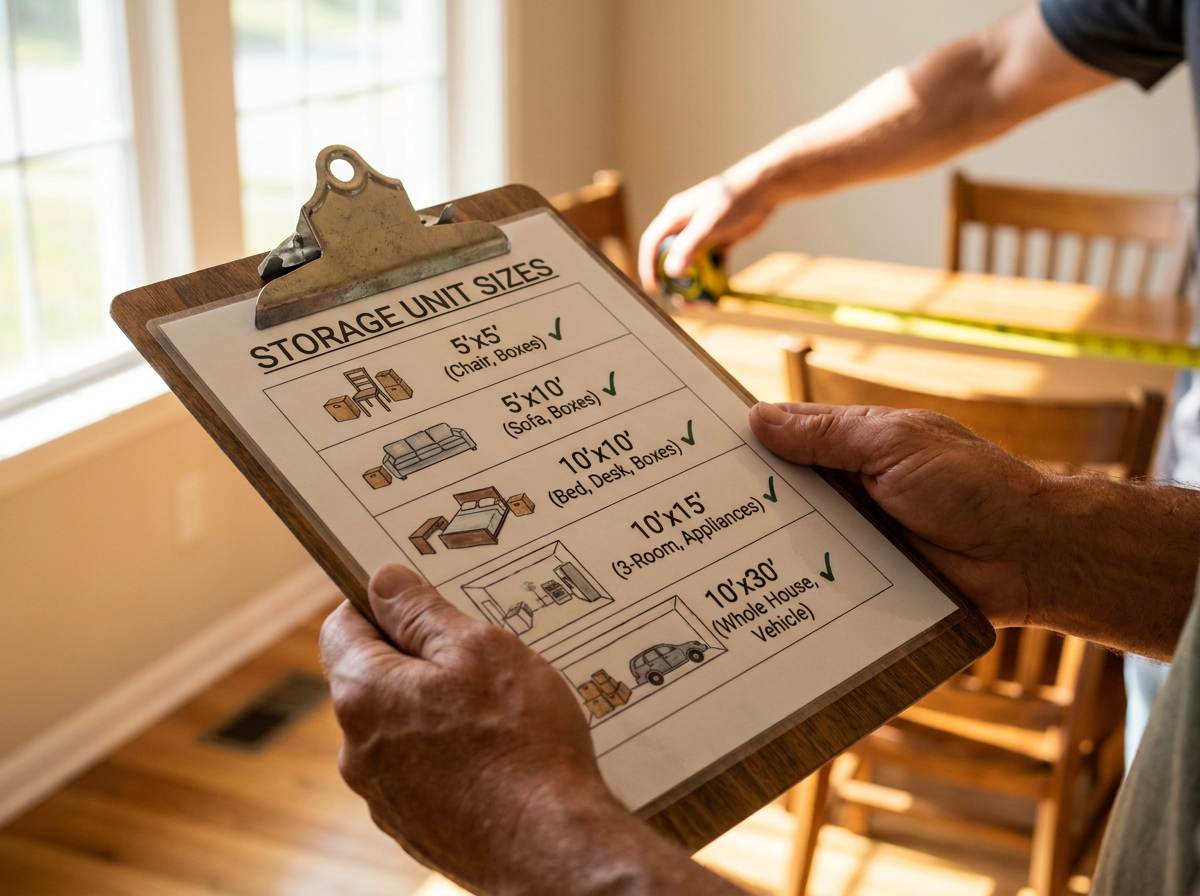
Storage Unit Size Chart for Common Furniture
Most storage facilities offer units ranging from 4x5 (20 square feet) to 10x30 (300 square feet). According to Extra Space Storage's size guide, standard units have 8-foot ceilings, giving you vertical stacking room that effectively doubles usable capacity when loading strategically.
The table below shows exactly what furniture fits in each common unit size, based on industry standards from Public Storage, U-Haul, and SpareFoot research.
| Unit Size | Square Feet | Furniture Capacity | Best For |
|---|---|---|---|
| 5x5 | 25 sq ft | Loveseat, small dresser, 5-8 boxes | Single room, seasonal items |
| 5x10 | 50 sq ft | Queen mattress, dresser, nightstands, 10-15 boxes | Studio apartment, bedroom set |
| 8x10 or 10x10 | 80-100 sq ft | Couch, bed, dining table, dresser, 20-30 boxes | One-bedroom apartment |
| 10x15 | 150 sq ft | Sectional, king bed, multiple dressers, dining set, 40+ boxes | Two-bedroom home |
| 10x20 | 200 sq ft | Full living room, 2-3 bedroom sets, appliances | Three-bedroom home |
| 10x30 | 300 sq ft | Complete 4-5 bedroom home contents, oversized furniture, vehicles | Large home, business inventory |
Step-by-Step Method to Calculate Your Furniture Storage Needs
Guessing leads to paying for unused space or cramming items into a unit that is too small. This Old House recommends a systematic approach: inventory first, measure second, then select a unit with buffer room.
Step 1: Create a Complete Furniture Inventory
Walk through every room and list each furniture piece you plan to store. Include dimensions for items larger than 3 feet in any direction. Most people underestimate by 20-30% when they skip this step, according to industry data from SpareFoot.
Common furniture dimensions to reference:
- Standard couch: 7-8 feet long, 3 feet deep, 3 feet tall
- Queen mattress: 5 feet wide, 6.5 feet long, 10-14 inches thick
- Dresser: 5-6 feet wide, 18-20 inches deep, 3-4 feet tall
- Dining table (6-person): 6 feet long, 3.5 feet wide
- Armoire: 4-5 feet wide, 2 feet deep, 6-7 feet tall
Step 2: Measure Your Largest Pieces
Your biggest furniture items determine minimum unit width and length. A 7-foot couch cannot fit in a 5-foot-wide unit unless you stand it on end, which risks damage. Measure length, width, and height of sofas, bed frames, dining tables, and entertainment centers.
Record measurements in a simple list format. For a typical one-bedroom apartment in Delta County or the Western Slope area, expect 8-12 major furniture pieces plus 15-25 boxes of household items.
Step 3: Account for Access Space
A fully packed unit costs less monthly but creates problems if you need to retrieve items. The Bolt Storage sizing guide recommends leaving a 2-3 foot aisle down the center or along one side for units you will access more than once per month.
For furniture storage during a home renovation or seasonal transition, plan for regular access. For long-term storage after downsizing, you can pack more tightly and save on monthly costs.
Will a Couch Fit in a 5x5 Storage Unit?
No, a standard couch will not fit in a 5x5 storage unit. At 25 square feet with 5-foot walls, a 5x5 unit cannot accommodate a typical 7-8 foot sofa in any orientation. You would need to cut the couch apart, which destroys it.
A 5x5 unit works for a loveseat (typically 4-5 feet long), accent chairs, small side tables, and boxes. If your couch is your primary concern, start with a 5x10 minimum or, for a standard full-size sofa plus other furniture, choose a 10x10 unit.
For residents in Delta, Montrose, or surrounding communities storing furniture during a move, the 8x8 units at our Palmer Street location offer 64 square feet, enough for a loveseat, small dresser, and several boxes at just $31.50/month with current promotional pricing.
Is a 10x10 Storage Unit Enough for a Couch?
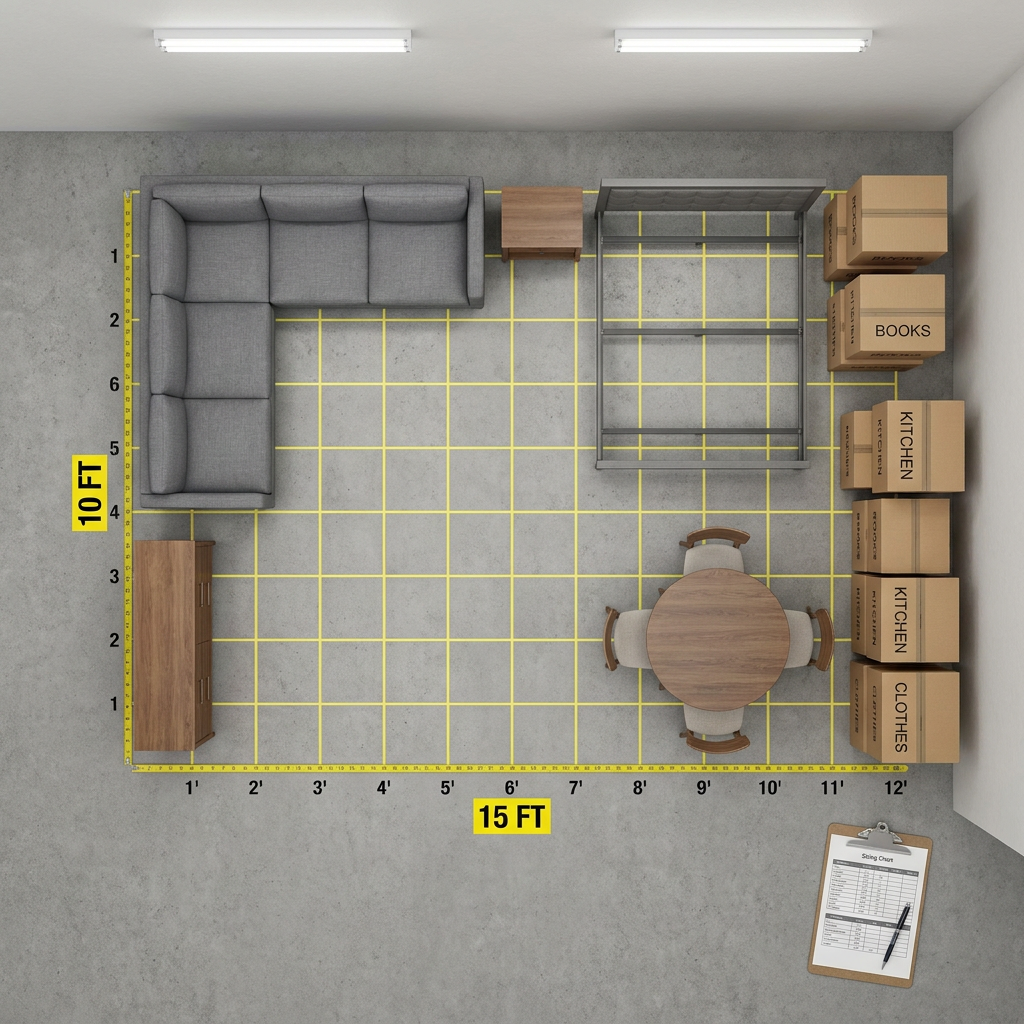
Yes, a 10x10 storage unit easily fits a couch plus additional furniture. With 100 square feet and 10-foot walls on each side, you can position a 7-8 foot sofa along one wall and still have 60-70 square feet remaining for a bed frame, dresser, dining chairs, and 20-30 boxes.
According to U-Haul's storage guide, a 10x10 unit holds the contents of a typical one-bedroom apartment or two fully furnished rooms. This makes it the most popular size for furniture storage nationwide.
The 10x10 units at Delta Self Storage's Palmer Street facility rent for $49.50/month (50% off regular pricing) and include drive-up access for easy furniture loading.
How Many Rooms of Furniture Will a 10x20 Storage Unit Hold?
A 10x20 storage unit holds furniture from 3-4 fully furnished rooms, equivalent to a typical three-bedroom home. At 200 square feet with 8-foot ceilings, you have approximately 1,600 cubic feet of storage volume when stacking efficiently.
Specific capacity for a 10x20 unit includes:
- Complete living room set (couch, loveseat, coffee table, entertainment center)
- Master bedroom furniture (king bed, two nightstands, dresser, armoire)
- Second bedroom set (queen bed, dresser, desk)
- Dining room table with 6 chairs
- 40-60 medium boxes
- Small appliances and miscellaneous items
For larger homes common in Cedaredge, Hotchkiss, Paonia, and the North Fork Valley, consider a 10x30 unit. Delta Self Storage offers 10x30 units with dual side access at the Palmer Street location for $449/month, providing 300 square feet for complete household contents.
Furniture That Requires Larger Units: Sectionals, Pianos, and Armoires
Certain furniture pieces push you into larger unit sizes regardless of your total item count. These "space hogs" have awkward dimensions or cannot be disassembled.
Sectional Sofas
L-shaped sectionals typically measure 10-12 feet on the long side and 8-10 feet on the short side. Even when separated into pieces, you need a 10x15 minimum. U-shaped sectionals require 10x20 units.
Upright Pianos
Standard upright pianos weigh 300-500 pounds and measure approximately 5 feet wide, 2 feet deep, and 4-5 feet tall. They cannot be tilted or stacked upon. Budget 25-30 square feet of dedicated floor space plus clearance for moving.
Armoires and Wardrobes
Large armoires stand 6-7 feet tall and 4-5 feet wide. They often cannot fit through standard doorways without removal of doors or trim. In storage, they consume significant vertical space and limit stacking options nearby.
Entertainment Centers
Wall-unit entertainment centers from the 1990s and 2000s often measure 6-8 feet wide and 6-7 feet tall. These require 10x15 or larger units and careful positioning to avoid blocking access to other items.
How Disassembly Reduces Your Required Unit Size
Breaking down furniture before storage can reduce your space needs by 25-30%, according to industry estimates from SpareFoot's storage experts. This translates to meaningful monthly savings.
Furniture that disassembles easily:
- Bed frames: Most metal and wooden frames break down to flat pieces under 6 inches thick
- Dining tables: Remove legs and store tabletop flat against a wall
- Desks: Detach legs and drawers for compact storage
- Bookshelves: Many flat-pack designs disassemble to original shipping dimensions
- Sectional sofas: Separate into individual pieces for flexible positioning
Keep all hardware in labeled plastic bags taped to the corresponding furniture piece. Take photos of assembly before disassembly to simplify reassembly later.
Vertical Stacking Strategies for Furniture Storage
Standard storage units have 8-foot ceilings. Using this vertical space effectively can double your practical capacity. However, furniture requires careful stacking to prevent damage.
Safe Stacking Practices
Place heavy, sturdy items on the bottom: dressers, desks, and sturdy tables. Stack medium-weight boxes on top of these pieces. Never stack anything on upholstered furniture, as weight causes permanent compression damage to cushions and fabric.
Mattresses should stand on edge along walls, not flat on the floor where they collect moisture and dust. Use mattress bags for protection. Couch cushions can stack on shelving units or in large boxes to maximize floor space.
Using the Full Unit Height
Bring a step stool or small ladder for loading. Fill the top 2-3 feet of the unit with lightweight boxes containing linens, pillows, and seasonal clothing. This space often goes unused, wasting 25-30% of available volume.
For residents throughout Delta County, Montrose County, and the Western Slope, our storage unit size guide provides visual references for maximizing space in each unit type we offer.
Climate Considerations for Furniture Storage in Western Colorado
Delta County experiences temperature swings from below 0°F in winter to above 95°F in summer. These extremes affect furniture materials differently.
Wood Furniture
Solid wood expands and contracts with humidity changes. Prolonged exposure to temperature extremes can cause cracking, warping, and joint separation. Antique furniture and heirloom pieces benefit from climate-controlled storage for periods exceeding 6 months.
Upholstered Furniture
Fabric and leather absorb moisture during humid periods and dry out in low humidity. Leather can crack; fabric can develop mildew. For storage lasting longer than one season, consider protective covers and moisture absorbers.
Metal Components
Metal bed frames, table legs, and hardware can rust in humid conditions. Apply a light coat of machine oil to exposed metal before storage. Check items quarterly if storing long-term.
Delta Self Storage's outdoor drive-up units work well for furniture storage lasting 1-6 months during moves, renovations, or seasonal transitions. For longer periods or valuable antiques, inquire about protective measures when you contact our team.
Common Furniture Storage Mistakes to Avoid
Industry data from Public Storage and Extra Space Storage indicates these errors cause the most problems for furniture storage customers.
Choosing Based on Price Alone
A unit that is $20/month cheaper but 20 square feet smaller often leads to damaged furniture from overcrowding. The cost of replacing a $500 couch far exceeds the $240 annual savings from a smaller unit.
Forgetting About Access Frequency
If you need to retrieve items monthly, a tightly packed unit wastes time and risks damage every visit. Budget for a unit one size larger than minimum requirements when you expect regular access.
Storing Furniture Dirty
Dust, food residue, and pet hair attract pests and cause odors during storage. Clean all furniture thoroughly before loading. Vacuum upholstery, wipe wood surfaces, and treat leather with conditioner.
Skipping Protection
Moving blankets, furniture pads, and plastic wrap prevent scratches and dust accumulation. A $50 investment in protection materials saves hundreds in furniture repair or replacement.
Delta Self Storage Unit Options for Furniture
Delta Self Storage operates two facilities in Delta, Colorado, serving residents from Grand Junction to Telluride and throughout the Western Slope. Both locations offer drive-up access, making furniture loading straightforward with a truck or trailer.
Palmer Street Location
The Palmer Street facility at 1044 Palmer St offers:
- 8x8 units (64 sq ft): $31.50/month (50% off), fits loveseat, small dresser, boxes
- 10x10 units (100 sq ft): $49.50/month (50% off), fits one-bedroom apartment furniture
- 10x30 units (300 sq ft): $449/month, dual side access for large homes or business inventory
Highway 50 Location
The Highway 50 facility at 694 US-50 offers:
- 4x15 units (60 sq ft): $29.50/month (50% off), fits mattress set and boxes
- 8x15 units (120 sq ft): $59.50/month (50% off), fits one to two bedroom contents
- 9x30 units (270 sq ft): $249/month, dual side access for large household moves
All units include 24/7 access, ground-floor drive-up convenience, and month-to-month rentals with no deposit required. You can rent online in 60 seconds and move in the same day.
Frequently Asked Questions About Furniture Storage Sizing
What size storage unit do I need for a couch and mattress?
A 5x10 unit (50 square feet) fits a standard couch and queen mattress with room for 10-15 boxes. For a king mattress or sectional couch, choose a 10x10 unit. Stand the mattress on edge along the back wall to maximize floor space for the couch.
Will a 5x10 storage unit fit bedroom furniture?
Yes, a 5x10 unit holds a complete bedroom set including a queen bed frame, mattress, dresser, and two nightstands. You will have limited space for additional items. For a bedroom set plus boxes and other furniture, upgrade to a 10x10 unit.
How do I measure furniture for storage?
Use a tape measure to record length, width, and height of each piece in inches or feet. Measure at the widest points, including any protruding elements like drawer handles or decorative legs. Add 2-3 inches to each dimension for protective wrapping.
Should I choose a climate-controlled unit for wooden furniture?
For storage exceeding 6 months, climate control protects wood from cracking and warping caused by temperature and humidity swings. For shorter periods or during mild seasons, standard units work well with proper preparation and protective covers.
Can I store a dining room set in a 10x15 unit?
Yes, a 10x15 unit (150 square feet) easily accommodates a dining table, 6-8 chairs, and a china cabinet or buffet. You will have approximately 80-100 square feet remaining for additional furniture or boxes from other rooms.
How much room should I leave for access inside a storage unit?
Leave a 2-3 foot aisle if you plan to access items monthly or more frequently. For long-term storage with rare access, you can pack more tightly and leave just enough room to reach the back of the unit when needed.
|